

🤖 From Lab Demos to Real Deployment: The Humanoid Companies Defining Physical AI
For years, humanoid robotics felt like a permanent science-fiction promise — technically fascinating, endlessly viral online, but always “10 years away.” ...that era is ending.

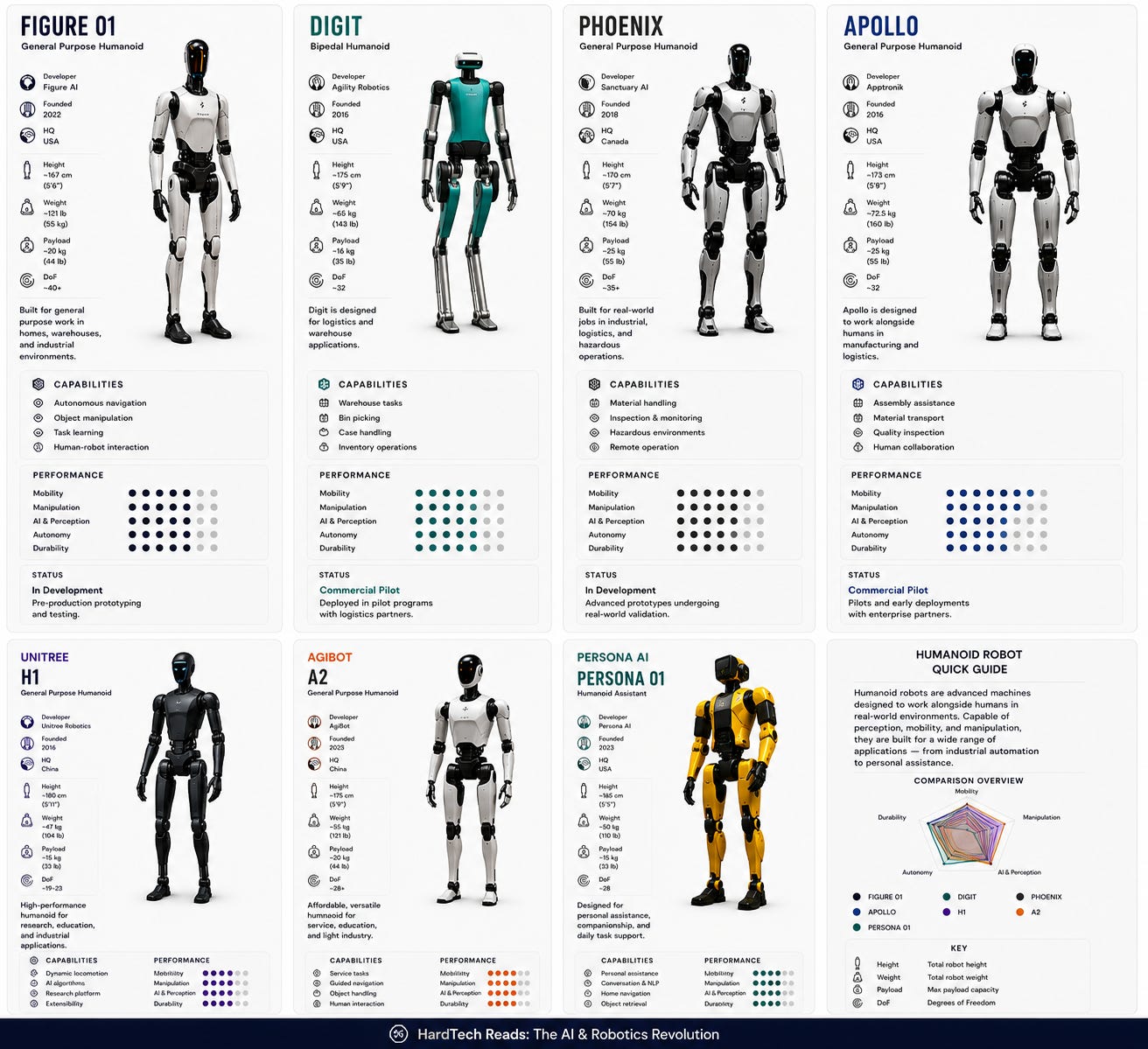
Over the last 24 months, humanoid robotics has crossed an important threshold: the industry moved from isolated lab demos into real-world deployment. Warehouses, factories, logistics facilities, retail environments, and industrial operations are becoming the first proving grounds for a new category of machine intelligence:
Physical AI
And honestly… it’s one of the most exciting technology shifts I’ve ever witnessed as an investor. (Yeah, I’m not that old..but still! 😎)
Not because the videos look cool on X.
But because we are watching intelligence leave the screen and enter the physical world.
That changes everything.
⚡ Why This Is Different This time
Unlike previous robotics cycles, this one is happening simultaneously across the entire stack:
Foundation models
Multimodal AI
Synthetic data generation
Edge compute
Dexterous manipulation
Spatial reasoning
Battery systems
Teleoperation & imitation learning
Better actuators and motion control
For the first time, the enabling technologies are maturing together.
And the result is a global race to build the first scalable humanoid workforce.
Not a toy.
Not a research experiment.
A workforce.
That’s a very different conversation.
🦾 Figure AI
Figure AI has quickly become one of the most visible humanoid companies in the world — and for good reason.
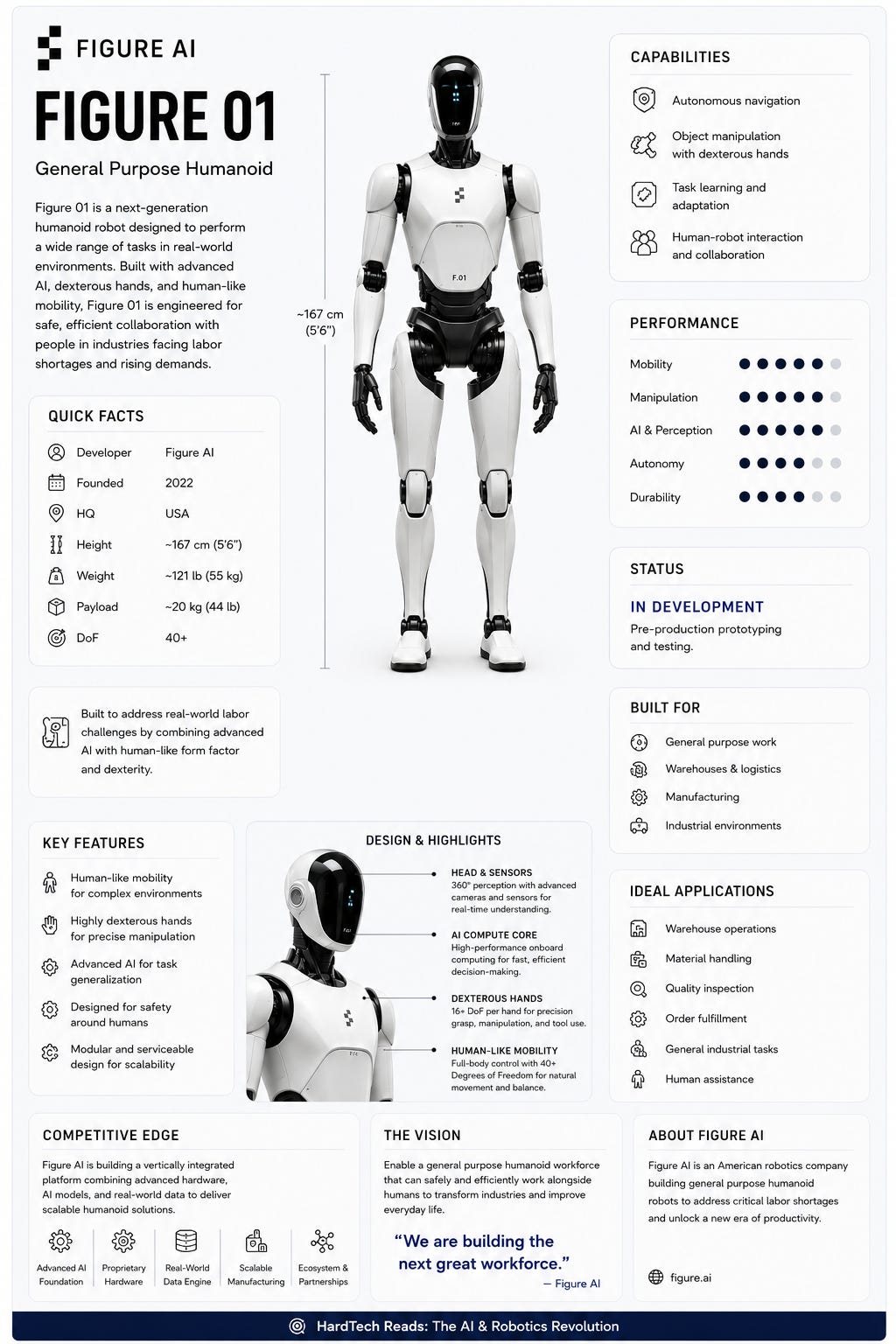
The company’s ambition is massive:
Build a commercially scalable humanoid platform capable of performing useful labor across industries facing workforce shortages and operational inefficiencies.
What I find especially interesting is that Figure seems to understand something many people still underestimate:
The humanoid race is not just about building a robot.
It’s about building:
the AI stack,
the deployment layer,
the simulation environments,
the data engine,
and eventually the ecosystem around it.
That’s why partnerships matter so much in this category!
Manufacturing and logistics also make perfect sense as early markets:
structured environments, repetitive workflows, measurable ROI, and painful labor shortages.
In my opinion, Figure has become one of the strongest contenders in the race toward commercially viable general-purpose humanoids.
📦 Agility Robotics
Agility Robotics may have one of the biggest advantages in the market today:
Operational experience, and they are obviously one of the oldest!
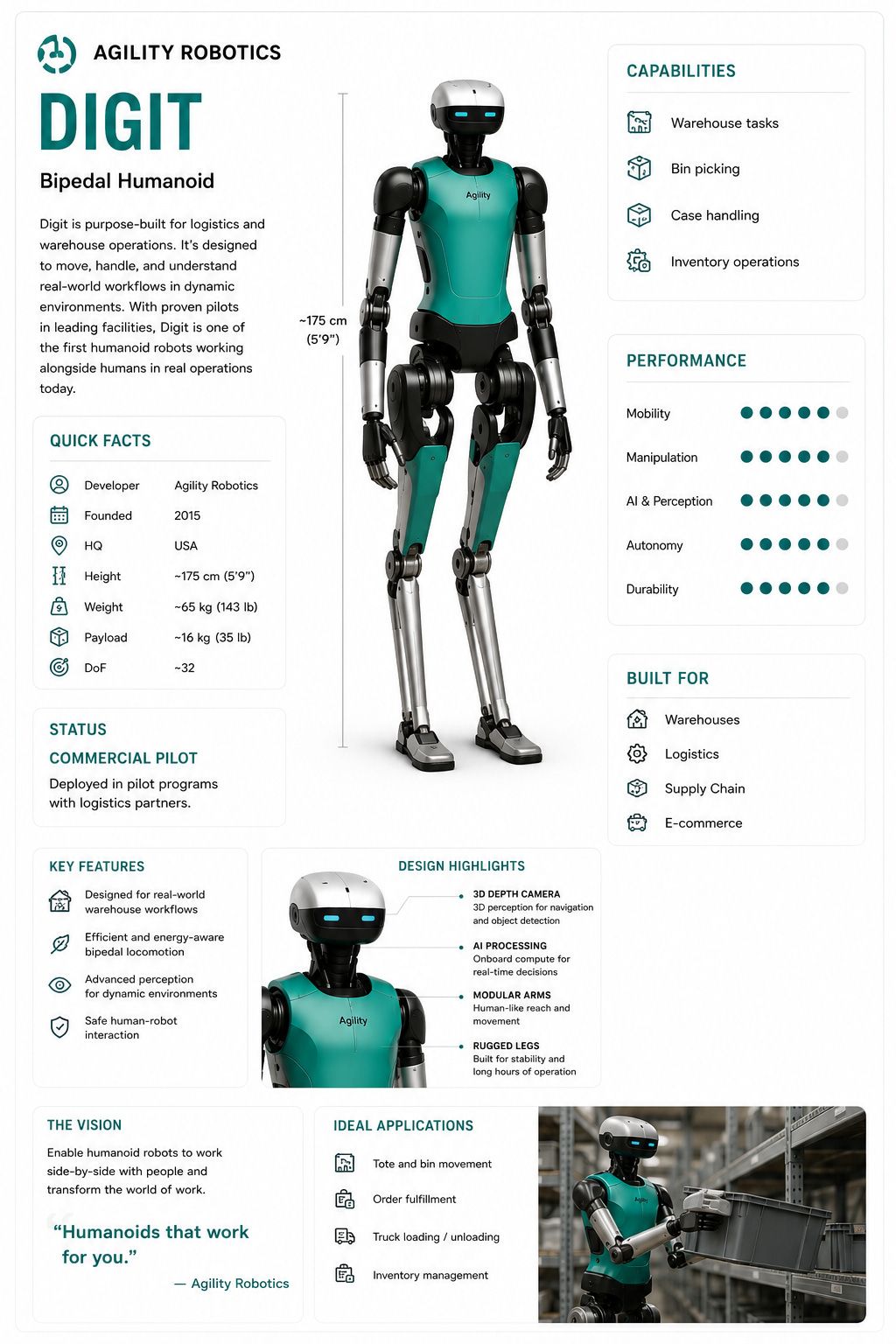
While many humanoid companies are still refining prototypes, Digit has already entered real warehouse deployments.
That matters enormously.
Because the humanoid race is not only about AI capability.
It’s about:
reliability,
uptime,
maintenance,
safety,
integration,
and operational economics.
Real-world deployment creates feedback loops that simulations alone cannot replicate.
I actually think this is one of the most underrated aspects of the industry right now.
The companies learning directly from real operations may develop massive long-term advantages in data and deployment know-how.
Agility’s more focused workflow strategy also feels very pragmatic to me:
solve specific logistics problems first → then gradually expand autonomy.
Historically, that’s often how transformative robotics companies win.
🧠 Sanctuary AI
Sanctuary AI represents one of the most ambitious visions in humanoid robotics.
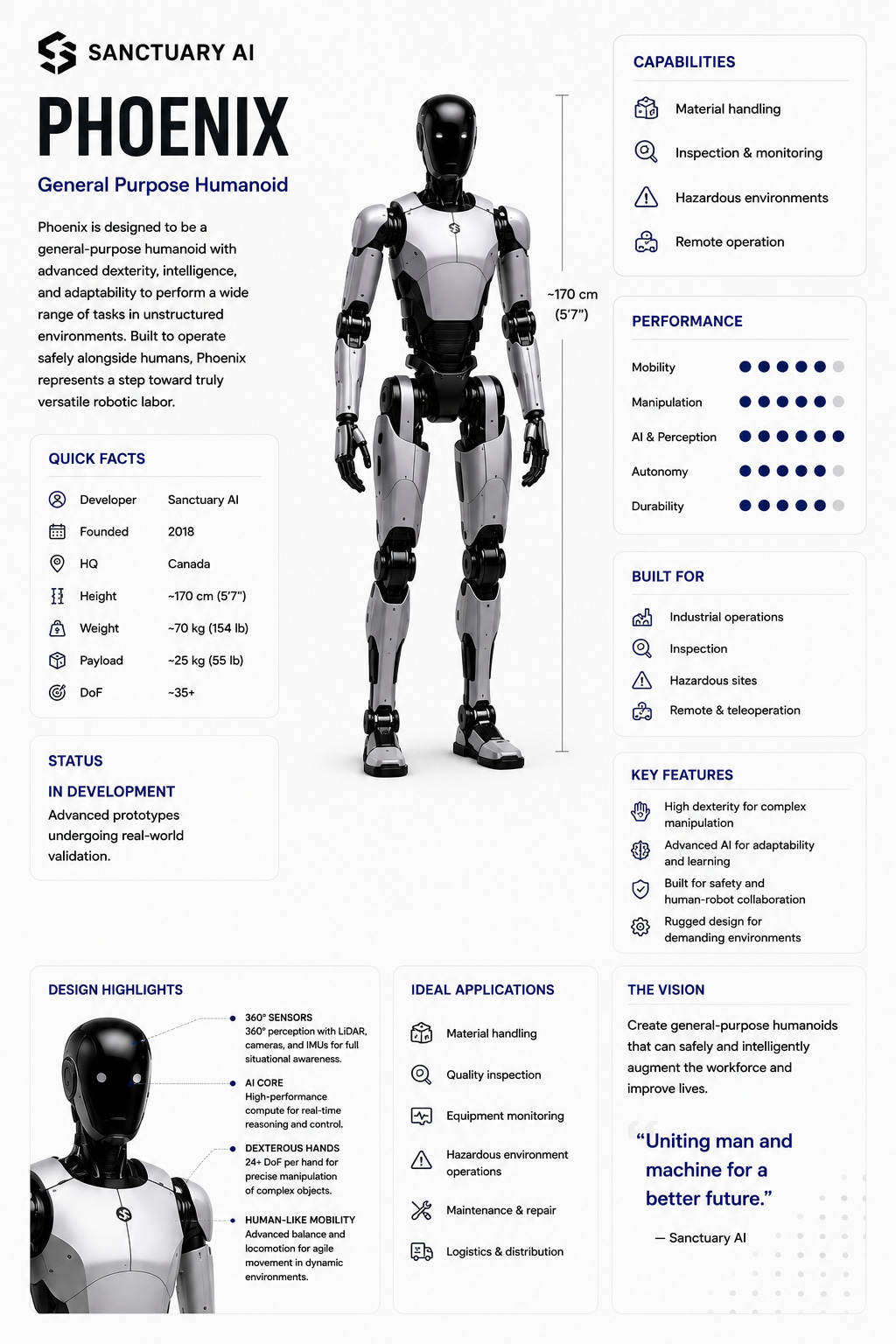
The company focuses heavily on:
dexterity,
manipulation,
and human-like task execution.
And honestly… manipulation may become the hardest problem in all of robotics.
Walking is difficult.
Generalized manipulation in unstructured environments is exponentially harder.
This is why Sanctuary fascinates me.
The company appears to think about humanoids less as fixed-function industrial machines and more as adaptable labor platforms capable of continuously learning new tasks over time.
That distinction is critical.
Because I increasingly believe:
Humanoids are ultimately data engines.
Every movement, correction, interaction, success, and failure becomes training data.
Over time, the best humanoid companies may look increasingly similar to AI companies rather than traditional robotics firms.
That’s a huge mental shift for the market.
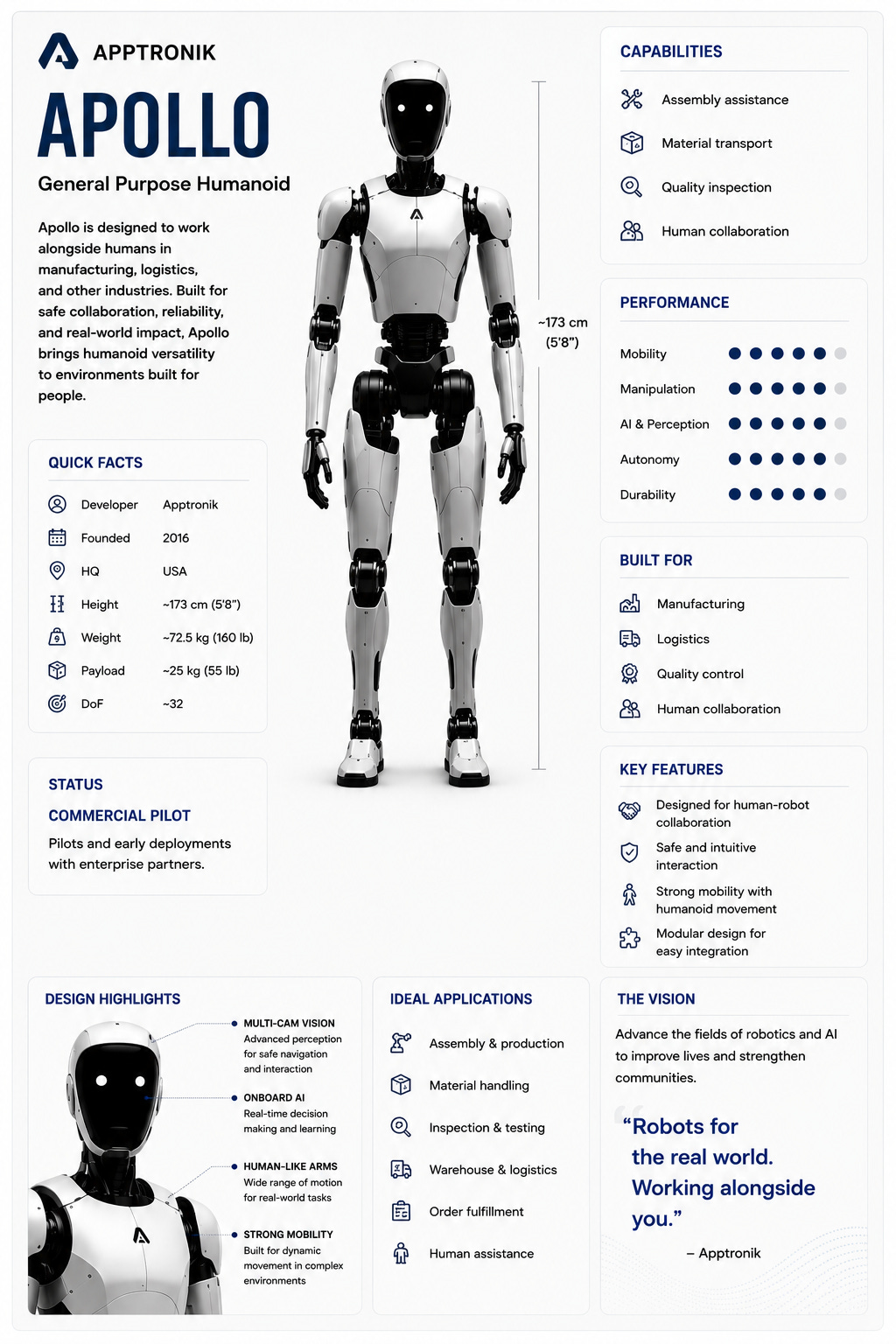
🚀 Apptronik
Apptronik reflects another powerful trend:
robots designed to integrate into environments already built for humans.
This may sound obvious, but economically it’s profound.
Factories, warehouses, hospitals, and retail environments were built around:
human movement,
human tools,
human workflows,
and human infrastructure.
Humanoids allow automation without redesigning entire facilities from scratch.
That dramatically lowers friction for adoption.
And honestly, this may be one of the biggest unlocks for the category overall.
The easier deployment becomes, the faster humanoids scale.
Apollo also represents the growing push toward collaborative robotics:
machines operating alongside humans rather than inside isolated industrial cages.
I think this transition will fundamentally reshape how labor and automation coexist.
🇨🇳 Unitree Robotics
Unitree Robotics is one of the most fascinating robotics companies globally because it demonstrates how quickly robotics capabilities are becoming democratized …and how cheap they can be!
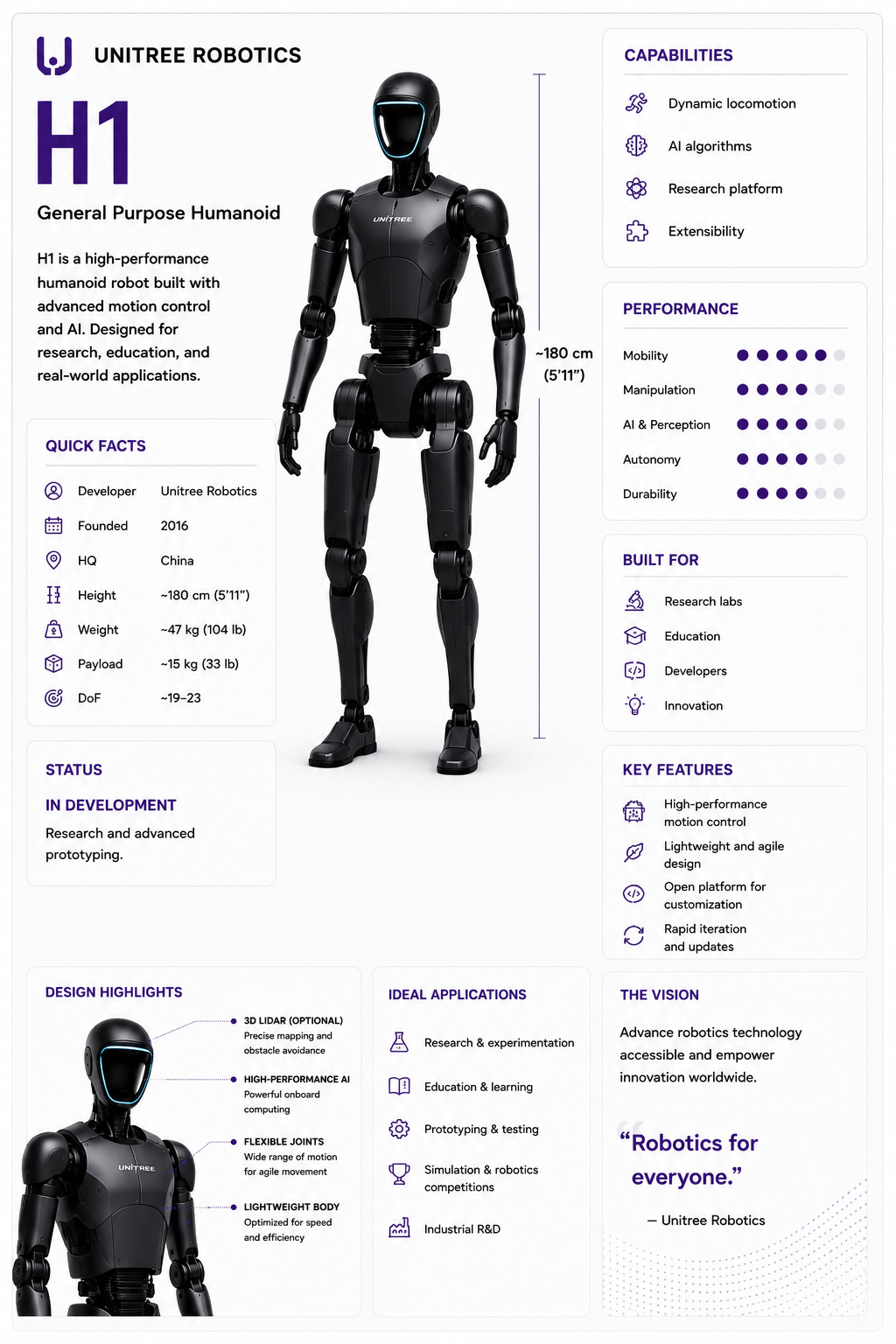
The company first became famous through quadrupeds, but its humanoid systems reveal something much larger:
China is rapidly building a vertically integrated robotics ecosystem.
And that should not be underestimated.
Unitree’s strengths:
affordability,
iteration speed,
manufacturing efficiency,
hardware accessibility,
ecosystem expansion.
Historically, advanced robotics systems were limited to elite labs and heavily funded enterprises.
Companies like Unitree are changing that dynamic.
And personally, I think this becomes extremely important long term.
Because humanoid robotics may eventually evolve into a platform economy:
developers, integrators, applications, accessories, APIs, simulation layers, data ecosystems.
The winners may not simply be the companies with the best robot.
The winners may be the companies that build the largest ecosystems around the robot🤔
⚙️ AgiBot
AgiBot reflects another major reality shaping the market:
China is accelerating extremely fast in Physical AI.
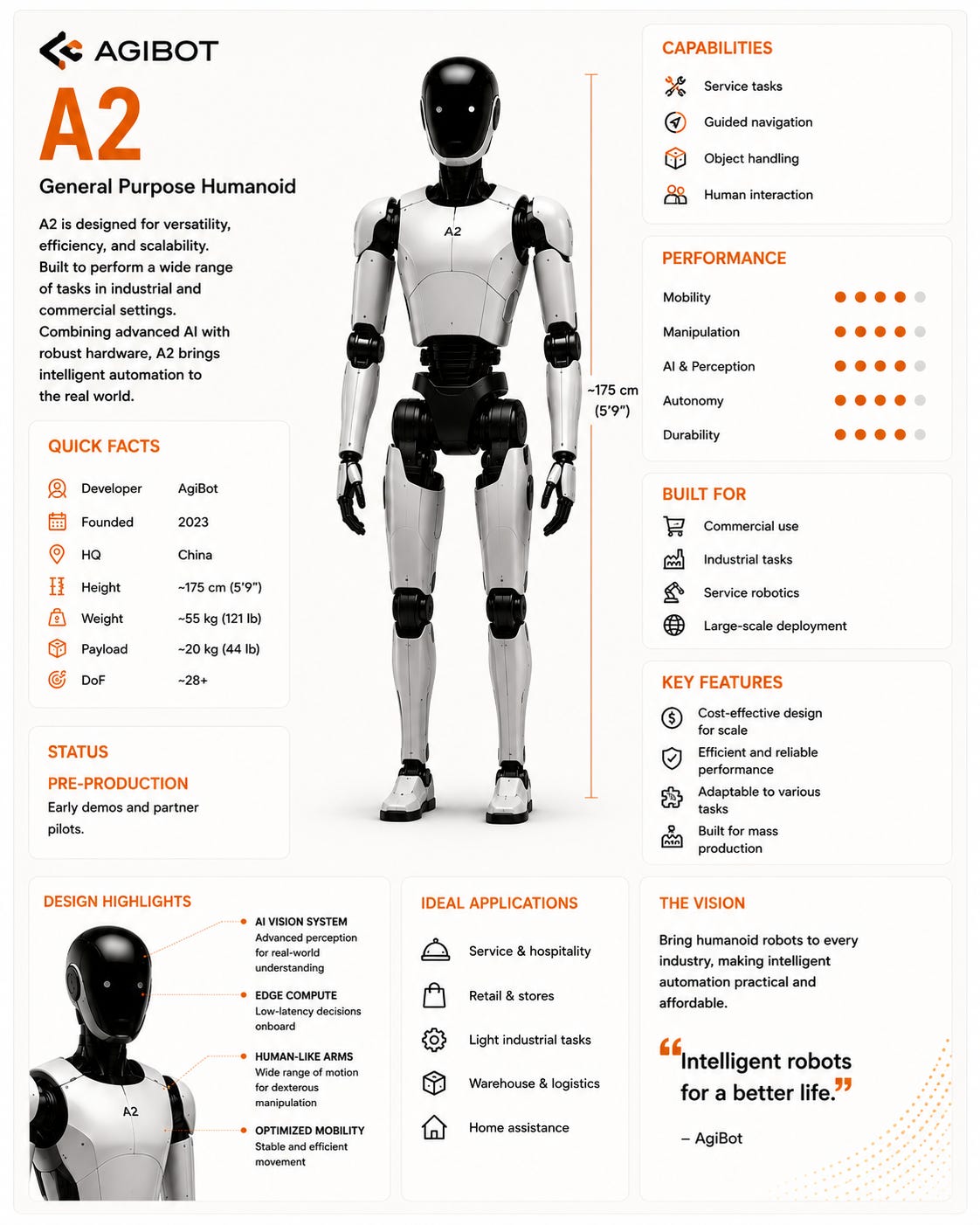
The advantages are significant:
manufacturing infrastructure,
supply chain density,
battery ecosystems,
electronics production,
deployment environments,
government support.
As humanoids move from prototypes into commercial systems, pricing and manufacturability become just as important as technical capability.
This feels very similar to what happened in:
EVs,
solar,
batteries,
consumer electronics.
The companies capable of scaling manufacturing efficiently may ultimately dominate deployment volume globally.
That’s something the Western market is still underestimating in my opinion.
🏗️ Persona AI
Persona AI actually represents a very different philosophy from many humanoid companies currently dominating headlines.
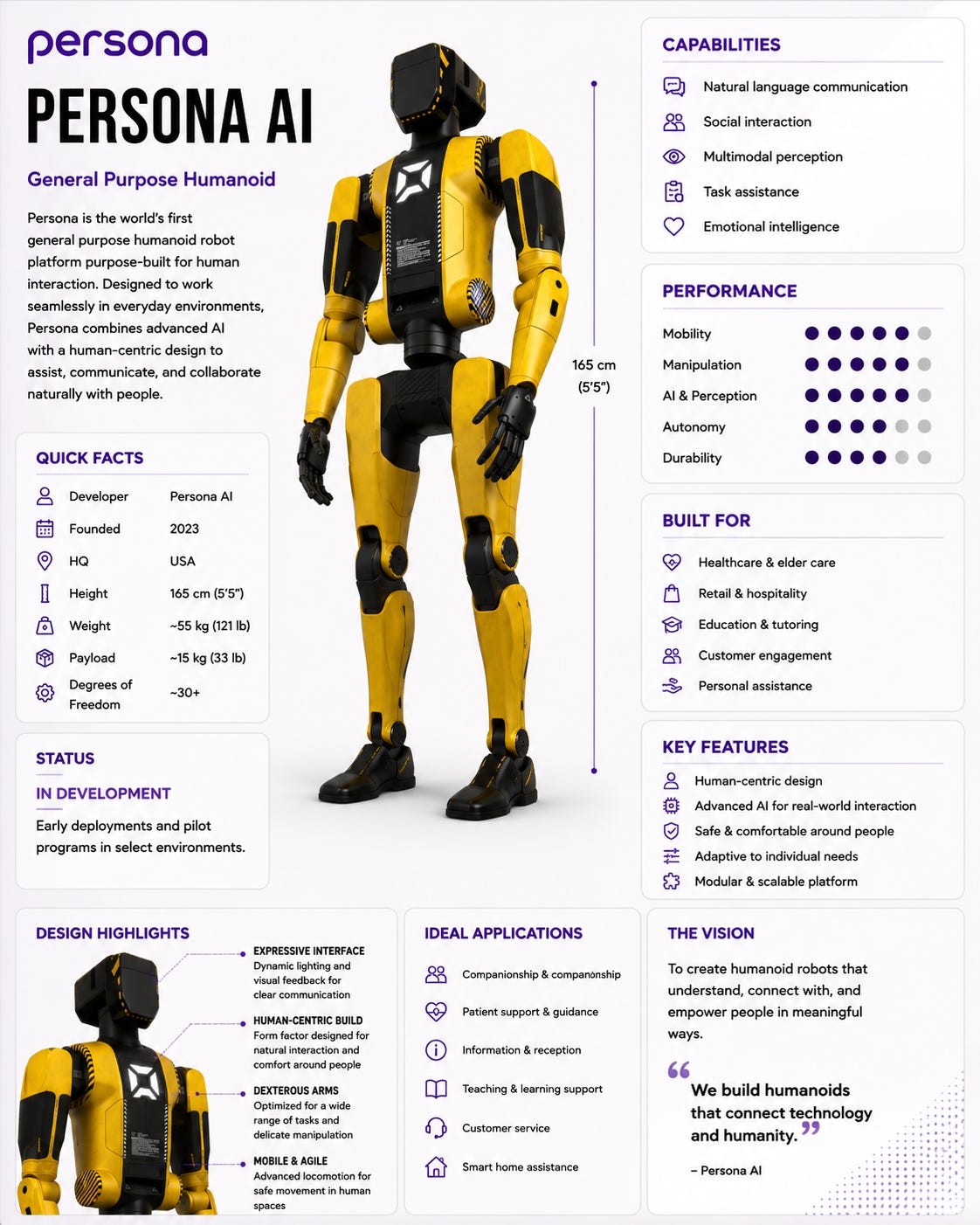
While a large part of the humanoid conversation focuses on household assistants, retail interaction, or generalized social robotics, Persona AI is clearly positioning itself around:
- industrial work,
- heavy-duty environments,
- fabrication,
- manufacturing,
- mining,
- and physically demanding labor.
And honestly, I think this positioning is extremely smart.
Their visual identity, product direction, and industrial branding make it clear that Persona is not trying to build a “friendly consumer robot.”
They are building humanoids for hard physical environments.
That distinction matters.
A lot of humanoid startups are optimizing for polished demos and generalized narratives around “helping humans.” Persona feels much more focused on industrial utility and rugged deployment scenarios.
The company appears particularly interested in environments where:
- labor shortages are severe,
- tasks are repetitive or dangerous,
- and traditional automation is difficult to implement.
Their branding around:
Assembler. Fabricator. Miner. Welder.
…signals a strong emphasis on real industrial workflows rather than purely conversational AI or companionship.
And this may actually become one of the most commercially important segments of the humanoid market.
Because heavy industry, manufacturing, energy, mining, and infrastructure represent massive labor and productivity challenges globally.
From an investment perspective, I also think this highlights something important about the broader humanoid ecosystem:
There will not be one universal humanoid strategy.
Some companies will optimize for:
- logistics,
- some for manufacturing,
- some for consumer interaction,
- some for defense,
- some for healthcare,
- and some for heavy industrial labor.
Persona AI seems to be carving out a very distinct identity around industrial-grade Physical AI.
And honestly… I think the market needs that specialization.
🌍 Ok now, why Humanoids matter soooo much?
Humanoid robotics is not just another hardware category.
It represents the convergence of:
AI,
robotics,
manufacturing,
infrastructure,
labor economics,
energy systems,
compute systems,
and human-machine interaction.
For decades, software transformed digital work.
Now Physical AI may transform physical work.
And the timing is not accidental.
Globally, industries are facing:
labor shortages,
aging populations,
supply chain fragility,
reshoring pressure,
rising operational costs,
and increasing demand for productivity.
Humanoids offer something unique:
adaptable automation inside environments already designed for humans.
That flexibility is incredibly important.
Traditional automation works best in highly structured environments.
Humanoids introduce the possibility of adaptable automation across dynamic environments without rebuilding entire facilities from scratch.
That’s why investors, enterprises, governments, and industrial players are suddenly paying attention all at once.
I’m really curious about🤔
How fast can they scale?
Which form factors will dominate?
What becomes the winning business model?
Who controls the deployment ecosystem?
Who owns the data pipelines?
How quickly do costs decline?
Which industries adopt first?
What happens to labor markets?
And what happens when intelligence becomes physical?
Honestly, I think we are still incredibly early.
But not for long ⚡
#PhysicalAI #HumanoidRobotics #GeneralPurposeRobots #AI #DexterousManipulation #FutureOfLabor