

Austria Just Built Its First Humanoid Robot (with a drone in the head)! Here's Why That Matters More Than You Think.
Nobody puts Austria on their humanoid robotics map…🧐

You hear Boston. Shanghai. Tokyo. Silicon Valley. Maybe UK if someone’s feeling generous about Europe. Austria? The country most people still associate with Mozart, skiing, and unusually good pastry?
That’s exactly the point.
Linz-based iono Robotics just publicly unveiled WORKMATE — Austria’s first autonomous humanoid robot — at a launch event in the Tabakfabrik Linz on May 28th. A converted tobacco factory in the industrial heart of Upper Austria. Not a Silicon Valley stage. Not a Tokyo convention floor. A working-class building that used to process tobacco, now hosting the country’s first real bet on humanoid labor.
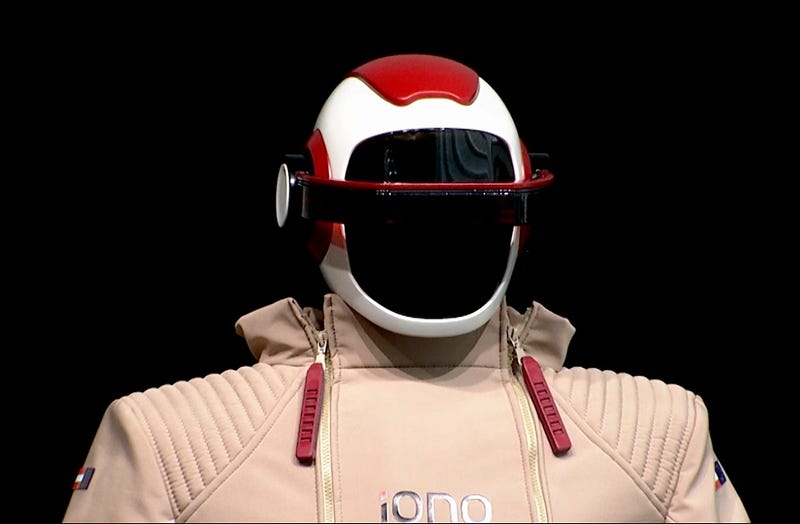
The optics aren’t accidental.
Why Austria, and why now?
Let me give you the “spicy” context first, because it matters.
Austria has 64 national shortage occupations as of 2026. Sixty-four. The country is so acutely short of skilled workers in specific trades that it fast-tracks immigration visas just to fill the gap. Manufacturing, logistics, construction — the exact sectors IONO is targeting.
This isn’t a Japan-level demographic emergency (yet), but the direction is clear. The DACH region as a whole is structurally short on manual labor. Germany alone had over 387,000 unfilled qualified worker positions in early 2025. Average labor costs in the region run among the highest in the EU. And the baby boomer exit from the workforce is accelerating, not slowing.
Europe has a labor math problem. Austria is living it acutely. IONO is building the answer.
Here’s the second contextual point that doesn’t get said enough: the humanoid robotics race has been almost entirely a US-China story. Figure AI, Agility, Apptronik, Physical Intelligence, 1X, Agility — all American. BYD, Unitree, DEEP Robotics — Chinese. The European roster is thin. IONO, founded in early 2025, is betting that a European-built robot with European data sovereignty and European safety standards is a real differentiator, not just a marketing claim. Given where EU AI regulation is heading, they may be right.
What WORKMATE actually is
The robot is named WORKMATE. It’s the commercial product sitting on top of the underlying IONO V1 hardware platform — and the name is deliberate. This isn’t a research demo. The pitch from day one has been industrial deployment, not a showcase.
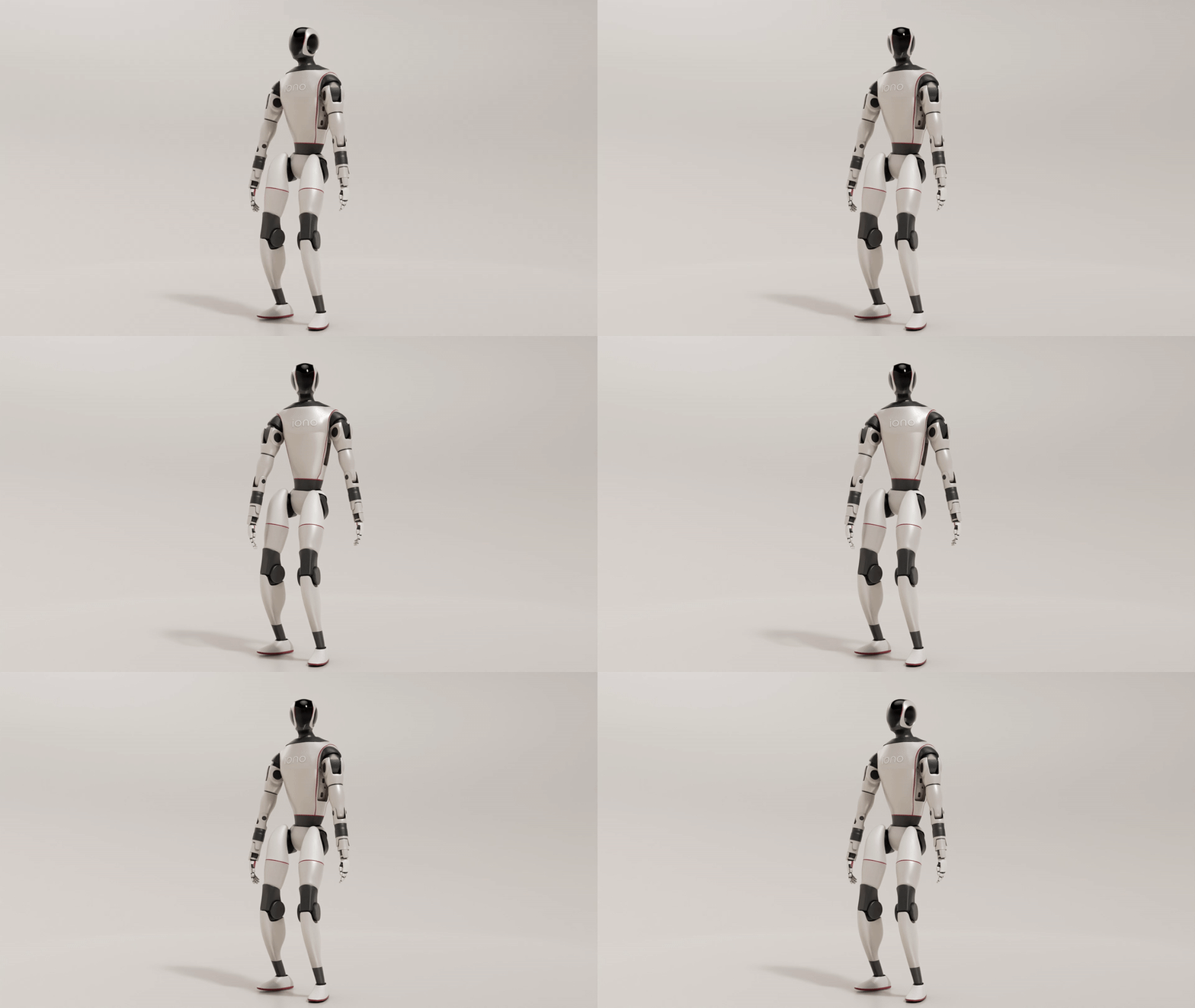
The specs:
Height: 177 cm (built to operate in human-scale environments, without retrofitting)
Weight: ~70 kg
Payload: 30 kg
Speed: up to 1.4 m/s
Sensors: 20+ including high-resolution LiDAR and depth cameras
Compute: NVIDIA Jetson Orin platform
Software: ROS 2 architecture, compatible with existing industrial IT systems
Battery: hot-swap capable for uninterrupted multi-shift operations
Connectivity: 24/7 continuous operation design
Variants: 6 mobility configurations planned
The headline technical detail that got attention at the launch: there’s a drone integrated into the robot’s head. The Multi-Head concept allows an onboard drone to detach mid-operation, map factory layouts from above, inspect hard-to-reach areas, or extend the sensor coverage. It’s a genuinely different architectural choice — and a clever one for industrial environments where floor-level navigation alone doesn’t give you full situational awareness.
Control runs through a proprietary software platform called Ionosphere — a closed system for AI and server infrastructure designed specifically around European data sovereignty requirements. Not just a nod to GDPR; an actual architecture decision that makes WORKMATE a harder sell to replace with a US or Chinese system once deployed.
The traction story
Founder and CEO Ümit Bas has 20 years in tech. He started the company in early 2025. Two days after founding, he was already at BAUMA Munich — one of the world’s largest construction machinery trade fairs — pitching to industrial customers directly. Not other founders, not VCs. The people who would actually buy the thing.

That’s a founder who knows the difference between building a robotics company and building a robotics demo.
By October 2025, IONO had its first paying pilot customer lined up. The Workmate launch on May 28th, 2026 delivered exactly what they said it would — on schedule, with live demonstrations in front of industrial partners, investors, and government representatives.
Current state:
Multiple pilot customers active, across both SMEs and large enterprises
Live product demonstrations completed
Series production timeline: ~2028
Target price point: five-figure range (€ tens of thousands)
Claimed ROI for operators: under 12 months
The 12-month ROI claim is the one to watch. If it holds up in practice, the sales cycle for WORKMATE collapses. Most enterprise hardware requires 3–5 year payback periods before procurement sign-off. A sub-year payback changes the conversation entirely.
IONO also founded the Austrian Humanoid Hub
Worth noting: IONO isn’t just building a robot. They’ve positioned themselves as the node around which Austria’s humanoid robotics ecosystem should form.
The Austrian Humanoid Hub — initiated by IONO — connects companies, researchers, and industry organizations around humanoid robotics development in Austria. It’s an ecosystem play, not just a product play. That’s smart positioning. When the category grows, IONO wants to be the entity that convened it.
What I actually think🤔
The field is still brutally early. IONO’s founder said it honestly at the launch: “We’re starting with simple pick-and-place operations. The technology is still in an early phase, even if social media often portrays it differently.” That’s a founder who understands where the line is between what’s working and what’s being marketed. Rare.
The competition is real and well-funded. Figure, Physical Intelligence, and Agility Robotics each have hundreds of millions in capital. IONO is a small team out of Linz with ambitions to be the European market leader.
But here’s what’s often missed in conversations about humanoid robotics: the US and China are building for global scale from day one. Europe needs a player that builds for European compliance from day one. Different labor laws. Different data residency requirements. Different safety certification standards. IONO’s entire positioning — Ionosphere, European data sovereignty, the Austrian Humanoid Hub — is a bet that regulatory fit matters as much as hardware specs in the long run.
That bet is worth taking seriously.
The question about Austria building humanoid robots has been asked skeptically since BAUMA 2025. IONO’s answer, one year later, is a working robot, paying pilots, and a production timeline.
The answer is getting harder to dismiss.
Check the full Humanoids Library here.
